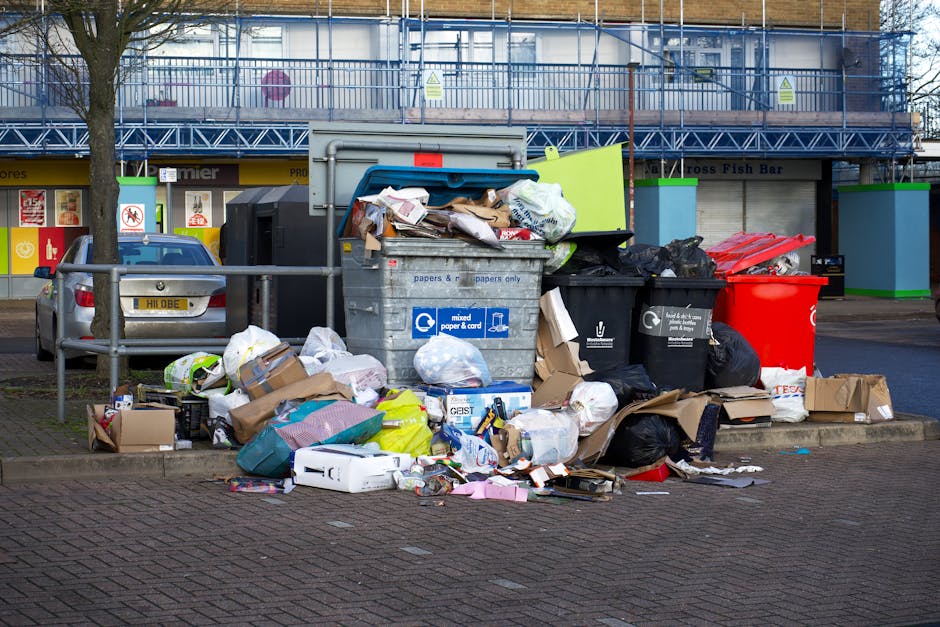
Real cost comparison rubbish removal versus skip hire in Chiswick

If you are weighing up real cost comparison rubbish removal versus skip hire in Chiswick, the decision is rarely as simple as "which is cheaper on paper?". In practice, the cheapest option depends on access, how much waste you have, how quickly you need it gone, and whether you can physically spare the time and effort. A skip can look budget-friendly at first glance, yet once permits, space, loading time, and delays are factored in, the final bill can feel very different. Rubbish removal, on the other hand, may seem dearer upfront but often includes labour, loading, and disposal in one clean price. Let's break it down properly.
You'll find a clear cost comparison below, plus the practical stuff that matters in Chiswick: tight drives, busy streets, flats, builder's waste, garden clear-outs, and those awkward piles of stuff that somehow grow overnight. Not glamorous, but very real.
Why Real cost comparison rubbish removal versus skip hire in Chiswick Matters
Chiswick has its own rhythm. Some streets offer easy access and a bit of kerb space; others are narrow, busy, or just awkward enough to turn a "simple" clearance into a minor logistics exercise. That's why comparing rubbish removal and skip hire by headline price alone can be misleading.
The real cost difference shows up in the details:
- Space: Can a skip fit safely without blocking access or upsetting neighbours?
- Permits: If the skip must sit on the road, a permit may be needed, which adds cost and admin.
- Labour: With a skip, you load it yourself. With rubbish removal, the team does the lifting.
- Timing: If you need waste gone quickly, a same-day or next-day collection may save hassle.
- Volume and weight: Some waste is deceptively bulky, some is brutally heavy. The mix matters.
Truth be told, people often compare a skip quote with a rubbish removal quote and forget they are not always equivalent products. One is a container you fill. The other is often a full-service clearance. Different model, different workload, different hidden costs. That matters if you are clearing a house, a flat, a garage, or even a mixed pile from a loft clearance.
Key takeaway: the cheapest option is usually the one that matches the job shape, the access on the day, and how much of the labour you want to do yourself.
How Real cost comparison rubbish removal versus skip hire in Chiswick Works
Skip hire is straightforward in theory. A skip is delivered, you fill it, and it is collected later. The price usually depends on skip size, hire period, and whether a permit is needed. It sounds tidy. And it can be. But there's a catch: you are the labour. You are also the organiser, the loader, and sometimes the person standing in drizzle at 7pm wondering whether you can squeeze one more broken wardrobe panel in without breaching the fill line.
Rubbish removal works differently. A team arrives, assesses the waste, loads it, and takes it away in one visit, or sometimes a short sequence of visits for larger jobs. Pricing typically reflects labour, vehicle use, disposal, and sorting. For people who want speed and less physical effort, that simplicity is the main appeal.
In everyday terms:
- Skip hire: you pay for the container and do the work yourself.
- Rubbish removal: you pay for a service that includes collection and loading.
That's the core difference. Everything else flows from it.
If you are comparing costs for a specific project, it can help to think in categories. A small tidy-up might be fine with a skip. A mixed household clearance, an urgent end-of-tenancy job, or a property with awkward stairs may be better suited to a service like waste removal in Chiswick. And if the job is mainly old chairs, wardrobes, sofas, or other bulky items, services such as furniture disposal can be a much more direct fit than hiring a skip just to move one heavy sofa.
Key Benefits and Practical Advantages
The best choice is not always the cheapest sticker price. It is the one that gives you the lowest overall cost once time, effort, and inconvenience are included. That sounds obvious, but people miss it all the time.
Why rubbish removal often wins on total value
- No manual loading for you: ideal if the waste is heavy, awkward, or upstairs.
- Less disruption: the waste is removed quickly, so your front garden, drive, or pavement is not occupied for days.
- Better for mixed loads: good when you have furniture, bagged rubbish, broken household items, and light DIY waste together.
- Flexible for access issues: useful where a skip would be a nuisance or impossible to place.
- Cleaner end result: the area is cleared in one go rather than you living with a half-filled skip for a week.
When skip hire can still be the better buy
- Large volumes of straightforward waste: especially where you can fill it steadily over time.
- DIY projects: if you are stripping a room over several days, a skip may suit the workflow.
- Easy on-site access: driveways, forecourts, or private land make skips simpler.
To be fair, if you have several days of demolition waste and a clean place to park a skip, the maths can favour skip hire. But if you have stairs, no driveway, or a job that needs all the mess gone by lunchtime, rubbish removal often starts looking cheaper in real life, not just on paper.
Who This Is For and When It Makes Sense
This comparison is useful for a lot of Chiswick residents and businesses, not just one type of customer. If you recognise yourself in any of the scenarios below, you are in the right place.
- Homeowners clearing a property: especially after a move, renovation, or big declutter.
- Landlords and letting agents: when a tenant leaves items behind or turnaround is tight.
- Flat residents: where access is awkward and skip placement is a headache.
- Office managers: for desks, chairs, filing units, and general office clearance.
- Builders and tradespeople: when fast removal matters more than loading a skip over several days.
- Gardeners and keen DIYers: when green waste, soil, timber, and broken materials are piling up.
If you are working through a full property clean-out, you may also want to look at services built around the type of space itself, like home clearance, office clearance, or builders waste clearance. Matching the service to the job type is often where the savings start.
And if you are simply comparing options because you do not want to overpay, that makes perfect sense. No one wants to spend more than they need to. Fair enough.
Step-by-Step Guidance
Here's a simple way to work out which option gives you the better deal without getting lost in the jargon.
- List the waste type. Is it furniture, garden waste, builders rubble, mixed household rubbish, or office items?
- Estimate the volume. Think in terms of van loads, bin bags, or room contents if that is easier.
- Check access. Can a skip be placed legally and sensibly where you are? Will it block parking, entrances, or neighbours?
- Consider labour. Do you have the time, strength, and help to load a skip safely?
- Factor in extra charges. Permits, long hire periods, overweight loads, and late collections can all change the final figure.
- Compare like for like. Make sure the rubbish removal quote includes loading, transport, disposal, and VAT if applicable.
- Choose the lowest total cost, not just the lowest headline rate. That's the bit that saves money.
A quick real-world example: a couple in Chiswick clearing a spare room might think a small skip is cheapest. But if the room is on the second floor, the driveway is tight, and the waste includes a bed frame, drawers, bags, and old shelves, the time spent shuttling items downstairs can quickly outweigh the apparent saving. The "cheap" option stops feeling cheap by the middle of the afternoon.
Expert Tips for Better Results
After enough clearances, you start to see patterns. The jobs that go smoothly are usually the ones where the customer did a little prep beforehand. Not loads. Just enough.
- Separate special items early: keep reusable items, general rubbish, and heavy materials apart where possible.
- Take a few clear photos: this helps with accurate quotes and avoids surprise extras.
- Be honest about access: stairs, restricted parking, narrow hallways, and basement levels all affect the job.
- Ask what the quote includes: loading, disposal, labour, and disposal fees should be clear.
- Plan around neighbours and building rules: especially in flats or shared properties.
- Think about recycling: a service with a strong recycling process can reduce what ends up as residual waste.
For some jobs, sustainability matters as much as cost. If that's important to you, it may be worth looking at a provider's recycling and sustainability approach. Not because it makes the quote magically lower, but because it can improve the value of the service overall. And honestly, that matters more than people sometimes admit.
One small practical tip: if you're clearing furniture, ask whether the provider offers separate furniture-focused options such as furniture clearance. When a job is mainly bulky items rather than mixed waste, the service can be more efficient and the quote more accurate.
Common Mistakes to Avoid
This is where people trip up. Usually not dramatically, just enough to add cost and annoyance.
- Comparing only the first quote: not all quotes cover the same things.
- Ignoring skip permits: a road-side skip without the right permission can become a costly nuisance.
- Overfilling a skip: this can lead to refused collection or extra charges.
- Underestimating labour: loading waste is harder than it looks, especially with heavy items.
- Not checking waste type rules: some items need special handling and cannot just be tossed in with everything else.
- Leaving booking too late: urgent jobs usually cost more, or at least cause more stress.
Another common slip is assuming a skip is always cheaper for building work. Sometimes it is. Sometimes it really is not. If you are dealing with mixed construction debris in a tight access property, the hidden cost is often the time and labour spent moving rubble, timber, plaster, and broken fixtures to the skip. That can chew through a weekend before you know it.
Let's face it, weekends are precious.
Tools, Resources and Recommendations
You do not need fancy tools to make a decent decision, just a few practical checks.
- Camera on your phone: take wide shots and close-ups of the waste.
- Rough room-by-room list: helpful for house and flat clearances.
- Measuring tape: useful if you are estimating skip size or checking access.
- Notepad or notes app: jot down item counts, bags, and any awkward items.
- Questions for the provider: ask what is included, what is excluded, and how pricing changes if the load is bigger than expected.
If you are arranging a full clearance rather than a simple rubbish collection, pages like house clearance, garage clearance, and loft clearance can help you think about the job in a more structured way. Different spaces create different waste patterns. A garage, for example, is often a strange mix of sports gear, tools, paint tins, old furniture, and things you forgot you owned.
For business customers, business waste removal can be more suitable than trying to manage a skip around staff, deliveries, and opening hours. In an office, a skip outside the door may simply not be practical.
Law, Compliance, Standards, or Best Practice
Waste removal in the UK is not something to treat casually. You do not need to become an expert in regulations, but it does help to understand the basics.
Responsible waste handling usually means:
- using a service that disposes of waste properly, rather than dumping it informally;
- separating recyclable material where possible, so usable resources are not wasted;
- checking whether a skip needs a permit, especially if it is placed on a public road;
- making sure hazardous or restricted items are dealt with appropriately, not mixed into general waste.
Best practice also means choosing a provider that is clear about insurance, safety, and its operating standards. If you want that reassurance, it helps to review pages such as insurance and safety and health and safety policy. Those pages matter because waste jobs are physical, and physical jobs carry risk. Lifting, tight access, shared hallways, traffic, and sharp materials all need proper handling. Nothing dramatic, just sensible care.
There is also the trust side of things. A transparent provider should be willing to explain pricing, payment, and terms clearly. If you want to understand how billing and ordering are handled, payment and security and terms and conditions are worth a look. It is a small step, but a useful one.
Options, Methods, or Comparison Table
Here is the practical comparison most people actually want: not theory, just what happens to the cost and hassle in the real world.
| Factor | Rubbish removal | Skip hire |
|---|---|---|
| Upfront price | Often higher than a basic skip quote | Can look cheaper at first |
| Labour | Included | You do it yourself |
| Speed | Usually fast, often same-day or next-day | Depends on delivery, filling time, and collection |
| Access needed | Less space needed for loading | Needs room for placement |
| Permit risk | Usually none for the customer | May apply if on public land |
| Best for | Mixed waste, heavy items, awkward access, quick clearances | Large DIY jobs, simple waste streams, long-duration projects |
| Total value | Often stronger when labour and hassle are included | Can be better for steady, self-managed loads |
If you are looking at a garden project, the same logic applies. A skip can be fine for soil and branches if access is easy. But for mixed green waste, old pots, broken fencing, and a bit of general junk from the shed, a dedicated garden clearance service may be more cost-effective once the loading time is counted. The same goes for bulky items in a house or flat. Different job, different winner.
One last thing: if your waste is mostly one category, like old sofas or wardrobe units, make sure the quote reflects that. Mixed loads are where costs can swing. A little.
Case Study or Real-World Example
Here is a realistic example based on the sort of jobs people in Chiswick often face.
A family clearing out a first-floor flat had a broken wardrobe, two mattresses, several bin bags of general clutter, and some small DIY debris after redecorating. At first, a skip seemed like the cheaper route. But the access was awkward, there was no driveway, and a road-side skip would have needed careful placement. More importantly, the family would have had to carry everything down stairs themselves, which meant time, effort, and a bit of backache they were not exactly looking forward to on a Saturday morning.
They compared that to a rubbish removal option. The quote was higher on the face of it. But the service included lifting, loading, transport, and disposal. No permit headache. No half-filled skip sat outside for days. No sore arms. Once all the practical costs were added up, the rubbish removal option made more sense.
That is the real lesson. A quote is only part of the story. The rest is the time you save and the hassle you do not have to absorb yourself. And in a busy week, that can be worth quite a lot.
Practical Checklist
Use this before you decide.
- Have I identified the exact waste type?
- Do I know roughly how much waste there is?
- Is access easy enough for a skip?
- Would I need a permit for a skip placement?
- Do I have time and help to load everything myself?
- Have I checked what the quote includes?
- Is the waste mixed, heavy, or awkward to carry?
- Do I need the area cleared quickly?
- Would a specialist clearance service suit the job better?
- Have I checked the provider's safety, insurance, and recycling approach?
If you can answer those questions honestly, the right option usually reveals itself pretty quickly. Sometimes annoyingly quickly, if you were hoping the skip would magically solve everything.
Conclusion
When you compare rubbish removal and skip hire properly, the cheapest option is not always the one with the lowest advertised figure. In Chiswick, access, permits, labour, time, and the type of waste can shift the real cost in a big way. For simple, accessible, self-loaded jobs, a skip can still be excellent value. For mixed waste, bulky furniture, flats, tight streets, or fast turnarounds, rubbish removal often delivers better total value and a much easier day.
The honest answer is this: compare the full job, not just the container or the collection fee. Once you do that, the choice becomes much clearer. And usually a lot less stressful.
If you are still weighing up the numbers, the safest next step is to get a clear, written quote based on your actual waste, your access, and your timing. That way you are comparing like with like, which is where the savings really begin.
Get a free quote today and see how much you can save.
Frequently Asked Questions
Is rubbish removal cheaper than skip hire in Chiswick?
Sometimes yes, sometimes no. If you include labour, loading time, permit costs, and the inconvenience of doing the work yourself, rubbish removal can be better value. For straightforward waste on easy-access property, a skip may still be cheaper.
What hidden costs should I look out for with skip hire?
The main ones are permit fees, overfilling charges, longer hire periods, and the time cost of loading everything yourself. If access is poor, there can also be a practical cost in terms of hassle and delays.
When does rubbish removal make more sense than a skip?
It usually makes more sense for mixed household waste, heavy furniture, flat clearances, tight access, or jobs you want finished quickly. If lifting the waste yourself would be a pain, rubbish removal is often the better choice.
Do I need a permit for a skip in Chiswick?
If the skip sits on public land or a road, a permit may be needed. The exact requirement depends on placement, so it is worth checking before booking. If the skip can go on private land, the situation is usually simpler.
Can I put furniture in a skip?
Yes, often you can, but it depends on the skip provider, the waste mix, and how much space the furniture takes up. For bulky items like sofas or wardrobes, a dedicated furniture clearance or disposal service can sometimes be more practical.
Is rubbish removal better for flats and apartments?
Very often, yes. Flats can involve stairs, lifts, shared entrances, and no suitable place for a skip. In those cases, a collection team can save time and avoid a lot of faff.
What is the cheapest option for builders waste?
If the job is large, simple, and you can load the skip easily, skip hire can be economical. If the site is tight, the waste is mixed, or you need fast removal, builders waste clearance may offer better overall value.
How do I compare quotes properly?
Make sure the quotes cover the same things: loading, labour, disposal, VAT if applicable, permits where relevant, and any charge for extra volume or weight. A lower headline price is not automatically the cheaper option.
Can garden waste go in a skip?
Usually yes, but you should still confirm what type of green waste is allowed and whether the mix includes soil, timber, or general rubbish. For heavier or mixed outdoor waste, a garden clearance service can be more convenient.
What if I only have a small amount of rubbish?
For a very small load, skip hire may be overkill. A smaller rubbish removal service, or a targeted collection for bulky items, can be more efficient and less wasteful from a cost point of view.
Is rubbish removal more environmentally friendly?
It can be, especially if the provider sorts waste carefully and prioritises recycling. That said, the environmental outcome depends on how the waste is handled, not just the service name. A good provider should be clear about its recycling approach.
How quickly can waste be removed in Chiswick?
That depends on the provider and the size of the job, but rubbish removal is often quicker than waiting for skip delivery, filling, and collection. For time-sensitive clearances, speed is often one of the biggest advantages.
What should I check before booking either option?
Check access, waste type, rough volume, whether permits may be needed, and what is included in the price. It takes a few minutes, but it can save a surprising amount of money and stress later.
If you want to learn more about the company behind these services, you can also review about us, and if you have a specific request, the best next step is to make direct use of the contact page. A clear conversation at the start saves a lot of back-and-forth later, and that is usually where a good job begins.